For Growing Founder-Led Businesses
Your Business Grew. Did Your Operations?
If growth has created more manual work, more team questions, more disconnected systems, and more things that require your personal attention, you may not have a growth problem.
You may have an operations problem.
Find Your Biggest Operational Bottleneck Start with a free 15-minute Operations Fit Check and find out whether people, process, technology, or automation is holding your business back.
Free • 15 Minutes • No Obligation





Does Growing Your Business Feel Like Creating More Work?
You're still involved in too many day-to-day decisions
Your team constantly comes back to you for answers
Important processes live in your head
Tasks fall through the cracks
Different systems don't communicate properly
Employees manually perform work that should be automated
Your CRM exists, but nobody fully uses it
You keep adding software without reducing workload
Hiring another person seems like the answer to every problem
Growth creates more complexity instead of more freedom
These aren't isolated annoyances. They're signs that your operating infrastructure may not be keeping up with the business.


Small Operational Problems Become Expensive Growth Problems
As the company grows, inefficient operations can create:
More Payroll — People get hired to compensate for processes that should have been improved or automated.
More Founder Dependency — The company grows, but the owner gets pulled into more decisions instead of fewer.
More Mistakes — Information gets lost between people, systems, departments, and processes.
Slower Growth — The company generates demand faster than the organization can reliably fulfill it.
Technology Waste — Software gets purchased but never properly integrated into how the company actually operates.
Adding another employee, another app, or another automation isn't always the answer. First, you need to know where the bottleneck actually is.

Stop Fixing Symptoms. Find the Bottleneck.
A growing company operates through four interconnected areas:
People — Who owns what? Are the right people doing the right work?
Process — Is there a reliable way work moves through the company?
Technology — Do your tools actually support the way your business operates?
Automation — Which repetitive tasks can happen without human intervention?
When one area breaks down, the others often compensate: bad process creates unnecessary staffing, bad technology creates manual work, poor ownership creates founder dependence, poor automation creates repetitive administrative work.
Cratus looks across the entire operating environment rather than assuming the first visible problem is the real one.


The Operations Fit Check
A Free 15-Minute Conversation About How Your Business Actually Runs
We'll talk through what's happening in your business, where you're feeling the most friction, what you've already tried, and what outcome you're trying to create. Along the way we're listening for signs of trouble across people, process, CRM, automation, technology, delegation, communication, and workflow — but the goal of this call isn't a full audit.
The objective is simple:
Figure out whether there's a real operational problem here, and whether Cratus is the right resource to help you solve it. If the problem runs deeper than 15 minutes can uncover, we'll tell you, and explain what a fuller diagnostic could look like.
You'll Leave With Clarity Around Two Things
Whether There's a Real Fit
Whether Cratus is well-positioned to help solve what's actually going on — or whether something else makes more sense.

What the Next Step Should Be
Sometimes that's a deeper 45-minute Operations Bottleneck Audit. Sometimes it's something simpler. We'll tell you either way — there's no obligation to move forward.
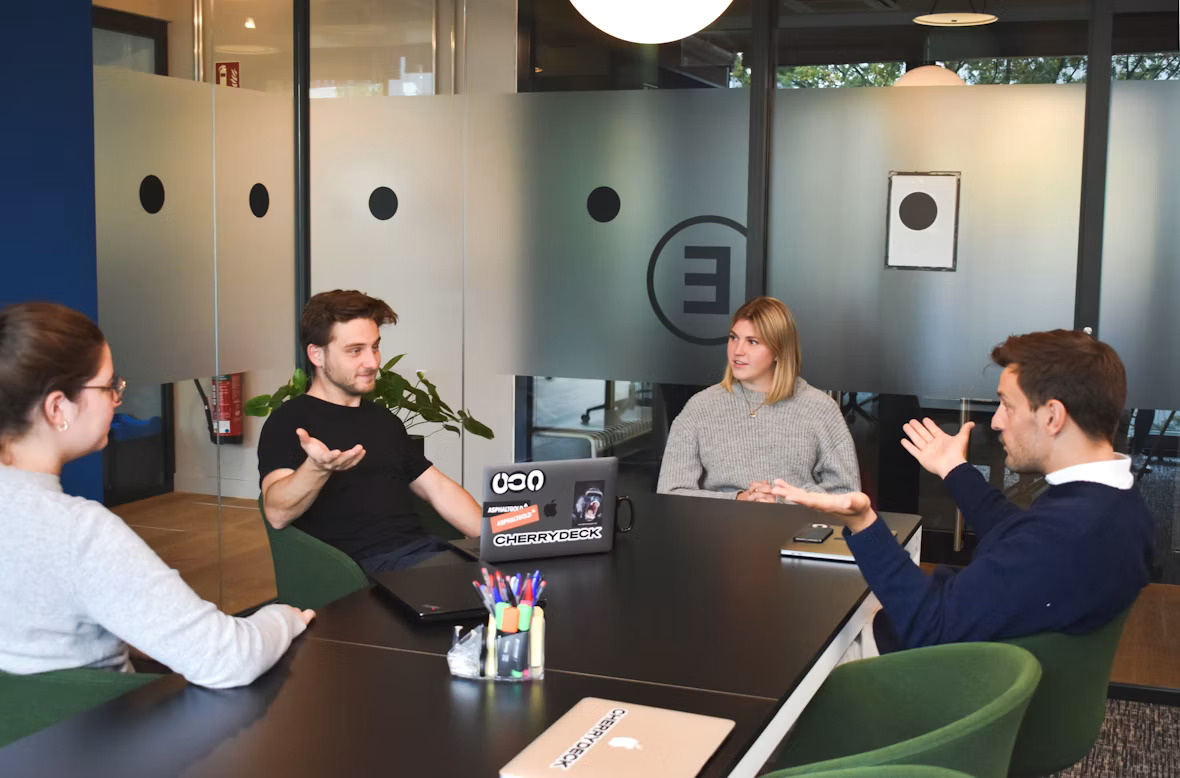
Growth Should Create Leverage. Not More Work for the Owner.
Imagine a business where your team knows what happens next. Processes don't depend on your memory. Systems communicate. Repetitive work happens automatically. Employees work from defined responsibilities. Information reaches the right person. Technology reduces workload instead of adding complexity.
You spend more time leading the company and less time operating it.
That's the direction Cratus helps companies move toward.
Think of Cratus as Your Outsourced Operations Team
Most growing businesses eventually need operational capabilities across several disciplines. Instead of assembling individual freelancers and trying to coordinate them yourself, Cratus brings together the people and technical capabilities needed to improve how the company operates.
Capabilities may include:
Operations
Systems
Automation
AI
CRM
Development
Virtual
Assistance
Documentation
Implementation
The specific tools are secondary. The objective is a business that operates better.

We Don't Start With the Tool. We Start With the Problem.
Many providers begin with what they sell: "You need a VA." "You need GoHighLevel." "You need an automation." "You need AI."
Cratus takes a different approach. First: what's creating the bottleneck? Then: what's the simplest way to remove it?
Sometimes that means automation. Sometimes better processes. Sometimes staffing. Sometimes fixing the technology already in place. Sometimes a combination.
Diagnose first. Prescribe second.
Built by Operators, Not Just Consultants
Cratus isn't a strategy firm that hands you a deck and disappears. The team works inside the systems — building the automation, managing the CRM, writing the code, documenting the process, and running the operations day to day when that's what a client needs.
That combination — strategy, technical implementation, and hands-on execution under one roof — is what separates Cratus from a typical consultant or freelancer.
Curious how Cratus got started

Operational Problems We've Helped Solve
Problem →
(what was happening)
Intervention →
(what Cratus changed)
Result →
(what improved)
Cover a spread of capabilities as they become available — CRM, automation, staffing, development, integrations, process improvement.
Avoid generic praise ("Cratus was amazing!").
Operational proof is stronger:
The client previously required 12 manual steps to onboard a new customer.
After implementation, the workflow required 3.
This is the same rule used on the homepage and About page Proof sections — same standard applies here.
But I Already Have…
…a CRM
Good. The question isn't whether you own software — it's whether the software supports your operation properly.
…an operations manager
The Fit Check can still help identify technical or process bottlenecks your internal team needs support solving.

…virtual assistants
Good. The issue may not be staffing. It may be process, automation, technology, or role clarity.
…employees
Good. The Fit Check may uncover ways to help your existing team operate more effectively.
…automations
Good. Individual automations don't automatically create an efficient operating system.
This Fit Check Is Best for Businesses That:
Are already operating and generating revenue
Have begun building a team
Are experiencing growing operational complexity
Use multiple software systems
Have repetitive administrative work
Feel overly dependent on the owner
Know things could operate better but aren't sure where to start
This probably isn't for:
Someone still looking for their first business idea
Businesses with no existing operations to evaluate
Someone only looking for the cheapest freelancer available
Someone unwilling to change existing processes
There's No Obligation to Hire Cratus.
The Operations Fit Check is designed to identify the problem first. If Cratus can help solve it, we'll explain what that could look like. If the solution doesn't require us, we'll tell you that too.
The first objective is clarity.

Your Business Shouldn't Need More of You Every Time It Grows.
Find the people, process, technology, and automation bottlenecks keeping your business from operating efficiently.
Free • No Obligation • 15 Minutes
frequently asked questions
What happens during the Operations Fit Check?
We talk through what's happening in your business, where the friction is, and what you're trying to fix. It's enough to know whether Cratus is a fit — not a full deep-dive.
Is this a sales call?
It's a qualification conversation. If Cratus looks like a good fit, we'll explain what the next step could be.
Do I need to use GoHighLevel?
No. Cratus isn't limited to one CRM, platform, or technology.
Do you only provide automation?
No. Automation is one tool. Solutions may involve people, processes, technology, development, automation, or a combination.
Can you work with my existing team?
Yes. Cratus can supplement existing employees and contractors rather than requiring you to replace them.
What happens after the Fit Check?
If there's a fit, we'll recommend an appropriate next step. Sometimes that's a deeper 45-minute Operations Bottleneck Audit ($250); sometimes it's something simpler. Depends on what we find.

BB Software Solutions LLC, d/b/a Cratus, provides operational execution, systems, and automation services for growing businesses. Results depend on factors specific to each business including existing systems, team execution, market conditions, and how recommendations are implemented and Cratus does not guarantee specific business outcomes, revenue, growth, or performance results. Case studies and examples referenced on this site reflect individual client experiences and are not a guarantee of similar results for your business. Questions? Email us at [email protected]
©2026.BB Software Solutions LLC. All Rights Reserved.